
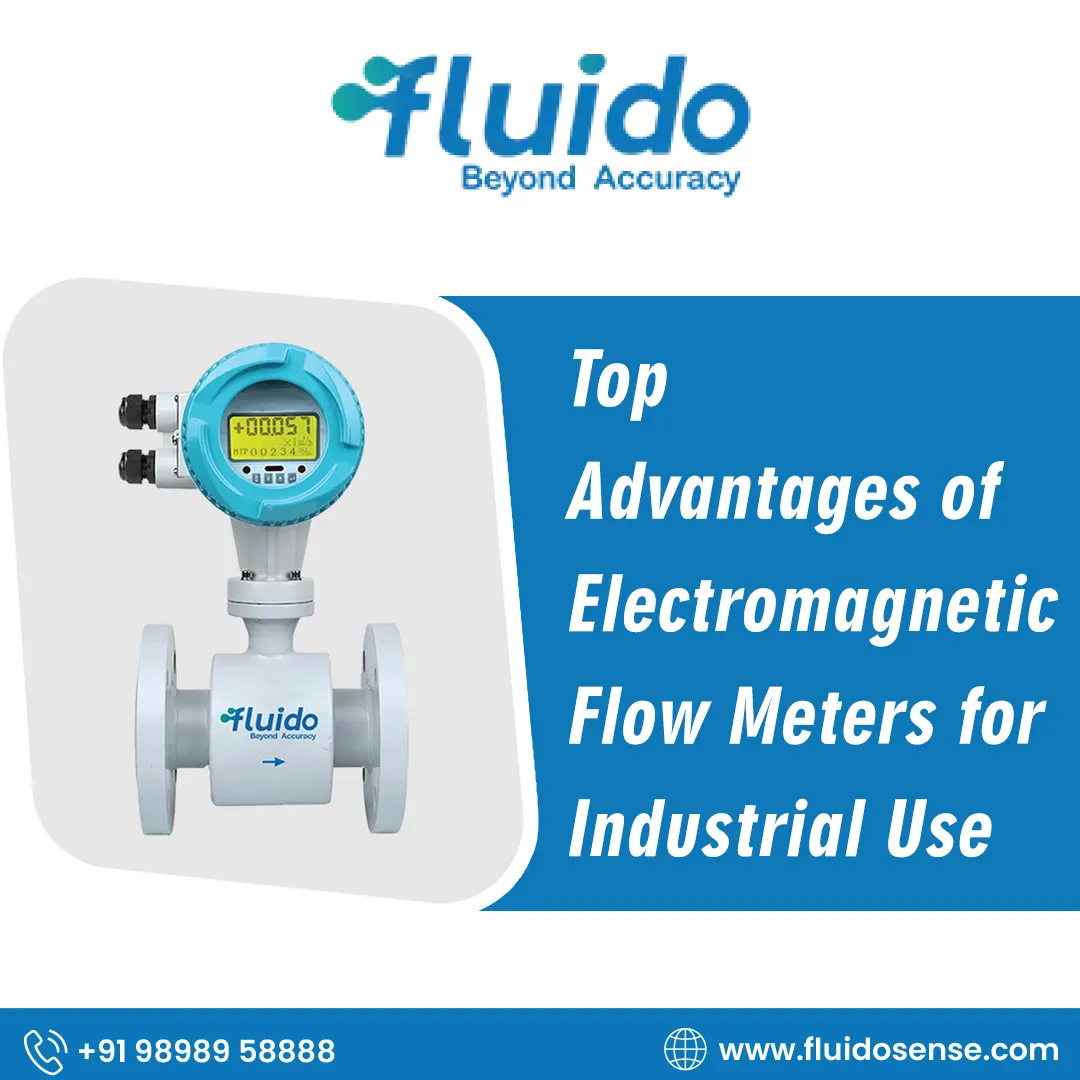
Accurate flow measurement is important in industrial work because it helps control processes, reduce waste, and avoid problems. Many industries depend on correct flow readings, like water treatment, chemicals, food and beverage, pharmaceuticals, and wastewater plants. And electromagnetic flow meters are widely used because they give stable readings and work with many kinds of liquids.
What an Electromagnetic Flow Meter Is
An electromagnetic flow meter is a device that measures the flow of conductive liquids. It creates a magnetic field inside the pipe, and when the liquid moves through it, a small voltage forms. The meter reads that voltage and converts it into the flow rate. And since there are no moving parts, the readings stay accurate for a long time without much maintenance.
Why Industries Prefer Electromagnetic Flow Meters
- High accuracy and repeatability: These meters give accurate results, and they are not affected much by temperature, pressure, or liquid thickness. After calibration, they continue to show stable readings, which is important for process control or billing.
- No moving parts: There are no internal mechanical parts, so there is very little wear and tear. Maintenance stays low, and the meter is less likely to clog or break, even when measuring wastewater or slurry.
- Works with many different fluids: They can measure clean water, wastewater, slurries, chemicals, and many other conductive liquids. This makes them applicable across numerous industries.
- Low pressure drop: There is nothing blocking the flow path inside the meter, so the pressure drop is very low. Pumps do not need extra energy to push the liquid.
- Measures flow in both directions: If the liquid flow reverses, the meter still shows the correct reading. This helps in processes where flow directions change.
- Easy to clean: The inside surface is smooth and free of parts that could trap material, so cleaning is simple. It works well for applications with strict hygiene needs.
- Many size options: These meters are available for small, medium, and large pipelines. They can fit easily into existing setups.
- Works in harsh environments: They perform well with high temperature or pressure and corrosive or abrasive liquids. Different liner and electrode materials help match different process needs.
- Easy integration with automation: They support common industrial signals like 4–20 mA, pulse, Modbus, and others, so they can be connected to SCADA or other control systems.
- Long-term cost efficiency: Even though the price at the start may be higher than mechanical meters, the savings from low maintenance, high reliability, and low energy use make them cost-effective over time.
Where Electromagnetic Flow Meters Are Commonly Used
- Water treatment and distribution
- Wastewater and effluent monitoring
- Chemical and petrochemical plants
- Food and beverage production
- Pharmaceutical manufacturing
- Mining and slurry flow
- Cooling water systems in heavy industries
How to Select the Right Electromagnetic Flow Meter
- Know the type of liquid and its conductivity
- Check pipe size and flow range
- Choose the correct liner and electrode material
- Confirm required output signals
- Follow installation requirements like straight pipe sections
Why Choose Us
Choosing the right manufacturer matters because the quality of material, calibration, accuracy, and after-sales support decide how long the meter will last and how well it will perform. When you work with a manufacturer that understands industrial conditions and different fluid types, you get a meter that fits your exact requirements. This reduces downtime, avoids mismatch issues, and makes maintenance easier. Having support close by also helps when installation, calibration, or repairs are needed quickly. It saves time, keeps operations running, and reduces overall cost in the long run. Fluido Sense Pvt Ltd offers industry-leading electromagnetic flow meters designed for these demanding needs.
Conclusion
Electromagnetic flow meters are a practical choice for industries that need reliable and accurate liquid flow measurement. They offer long service life because there are no moving parts, and they work with many kinds of conductive liquids without causing pressure loss. They are simple to maintain, easy to clean, and easy to connect with automation systems. Over time, they help reduce operating costs and improve process efficiency. Choosing the right manufacturer and the right meter configuration makes a big difference in performance, durability, and total cost of ownership.
For more information on our Electromagnetic Flow Meters and other industrial solutions, contact Fluido Sense Pvt Ltd today. Call us at +91 98989 58888 or email us at sales@fluidosense.com to explore our range of precision flow meters tailored for your applications.
key takeaways
- High accuracy and stability: Electromagnetic flow meters provide consistent and reliable readings, even when temperature, pressure, or fluid properties change.
- Low maintenance design: With no moving parts, these meters face minimal wear, reducing maintenance needs and downtime.
- Wide fluid compatibility: They work well with many conductive liquids, including water, wastewater, slurries, and chemicals.
- Efficient flow performance: The open flow path causes very low pressure loss, helping save pumping energy.
- Long-term cost benefits: Although initial cost may be higher, long service life, low maintenance, and reliable operation make them cost-effective over time.
FAQs
Any conductive liquid like water, wastewater, slurry, chemicals, beverages, or other fluids with minimum electrical conductivity.
Yes. It shows correct readings even when the flow direction changes.
No significant pressure drops because nothing inside the meter blocks the flow path.
Maintenance is minimal since there are no moving parts. Mostly inspection and cleaning if the fluid has heavy particles.
Yes, as long as the liquid has enough conductivity and the meter uses suitable liner and electrode material.